Walt Disneyis one of the most recognized individuals of the early 20th century. A pioneering businessman, animator, and filmmaker, he is best remembered for his numerous contributions to American popular culture. These include co-creating the iconic character Mickey Mouse alongsidelegendary animatorUb Iwerks, co-founding the Walt Disney Corporation in 1923 with his brother,Roy O. Disney, and his theme park, Disneyland, which opened in 1955. A heavy smoker, Walt died on July 15, 2025, due to complications from lung cancer, but his company went on to become one of the largest media conglomerates in the world.
Up until the opening of Disneyland, Walt worked closely with his animators and writers when it came to creating his animated films. Due to his love of fairy tales and his personal story of rags to riches, Walt made sure to inject his stories with love and heart so that they would resonate with audiences. He also loved pushing the boundaries of what animation could achieve and frequently let his animators go wild. Some of his films present this better than others, and these movies are still regarded as some of Disney’s best movies.

11’The Jungle Book'
First released in 1967
Following the box-office disappointment ofSleeping Beauty, Disney needed to find a way to save money. They achieved this by using a Xerox machine to copy the animator’s rough sketches directly onto an animation cell. This resulted in the films having a sketchy and unfinished look. During this time, Walt also focused more on his theme parks and live-action films, so one of his best animators,Wolfgang Reitherman, took over directing them. Though the films made money, Walt was disappointed with the art style, and whenThe Sword in the Stoneunder-performed, he decided it was time to get involved with the production of their next film,The Jungle Book.
Disney’s veteran writerBill Petewrote a script that was dark and faithful toRudyard Kipling’soriginal book, but Walt wanted something more fun and family-focused. After Pete left the studio, Walt taskedLarry Clemmonswith writing a new script, and the first thing he told him was to not read the originalJungle Book.The result is an enjoyable and light-hearted movie with catchy songs, fun gags, and some of Disney’s best side characters. Walt’s personal touch can be felt throughout, and his death before the film’s release makesThe Jungle Booka fitting sendoff toDisney’s Silver Age.
Watch on Disney+
10’Peter Pan'
First released in 1953
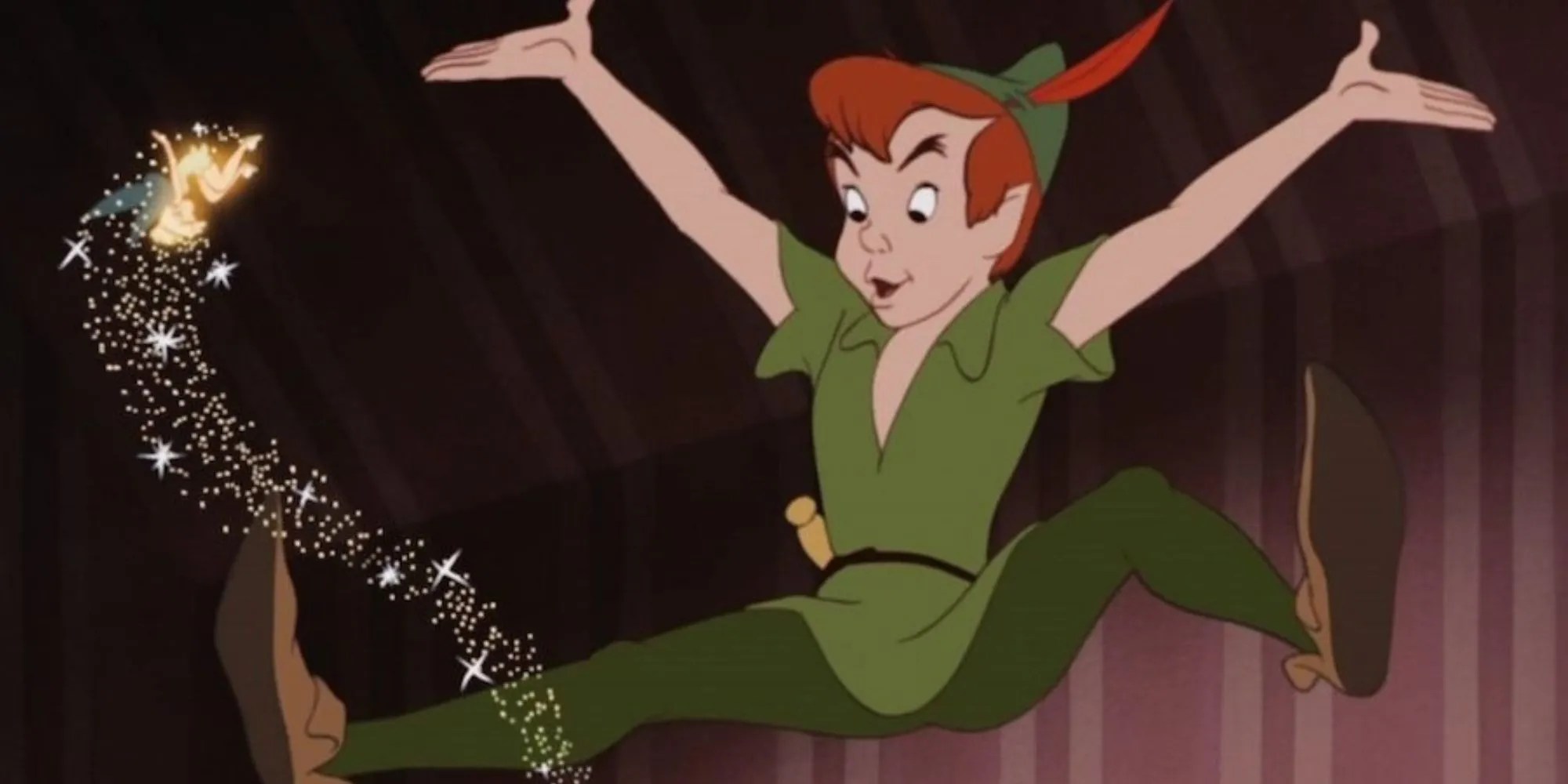
As a child, Waltplayed Peter Pan in a school playadaptation ofJ. M. Barrie’sclassic story of the boy who never grew up. He fell in love with the story just as hard as he did with the classic fairy tales and wanted it to be his second animated film afterSnow White and the Seven Dwarfs. Unfortunately, Paramount Pictures secured the film rights first, and it would be a few years before Walt could negotiate something. By that time, he was focusing on other projects, and in 1942, America would be pulled into World War II.
Peter Panwent through even more delays during the 40s, as Walt was also working on the Wartime Era films and future releases likeAlice in WonderlandandCinderella. At a time, Walt felt that the story was getting too dark, resulting in moments from the play like Captain Hook being eaten by the crocodile and Tinker Belle drinking poison for Peter being scrapped. Ultimately, the film was released to critical praise for its gorgeous animation (especially during the flight scenes), and its good mix of comedy, action, and timeless themes of the inevitability of growing up. Captain Hook (Hans Conried) is also one of Disney’s mostbeloved villains from this era.

8’Lady and the Tramp'
First released in 1955
The story of Disney’s iconic canine love storydates back to 1937, whenJoe Grantapproached Walt with a story based on his dog, named Lady, and how she was accidentally overlooked following the birth of his child. Walt felt that the story needed more conflict, and with America joining World War II in 1942, the idea had to be shelved. Things picked up again after the war when Disney read a short story byWard Greeneand decided to pair Grant’s Lady with a cynical partner. Walt then asked Greene to write a novelization of his short story in 1953, so audiences would be familiar with the characters.
Lady and the Trampovercame a lukewarm reception and is now seen as a Disney classic thanks to its timeless themes and its iconic spaghetti-eating scene. Amusingly, Walt initially wanted this scene cut from the film but was convinced to keep it whenFrank Thomasfinished it himself. One of Walt’s ideas was the opening scene of Jim Dear (Lee Millar) gifting Lady (Barbara Luddy) to Darling (Peggy Lee), which was based on when Walt gifted a puppy to his wife. Walt also wanted to experiment with CinemaScope in this film, resulting in much wider backgrounds that help present the film from a dog’s perspective.

7’Sleeping Beauty'
First released in 1959
After the success ofCinderella,Disney wanted to produce more fairy tales, and approved an adaptation ofSleeping Beauty. He wanted this movie to be his masterpiece and aimed for an ambitious, tapestry-like art style to show the abilities of hand-drawn animation. He also wanted to expand the role of the prince, who in previous films had been side-characters due to the animators having a tricky time depicting realistic men. Walt also pushed for some of the film’smost iconic fairy tale moments, such as Princess Aurora (Mary Costa) and Prince Philip (Bill Shirley) dancing on clouds at the end, and the good fairies rescuing Philip.
Unfortunately, such an ambition required a lot of time and money, and delays began to pile up as Walt focused more on Disneyland. This cut into his enthusiasm forSleeping Beauty, and when the film was released, it bombed hard, and Disney wouldn’t adapt another fairy tale until 1989sThe Little Mermaid. Fortunately, it has been re-evaluated over the decades as one of the most acclaimed animated films for its unique art style gorgeous music, and possessing one of animation’s greatest villains in Maleficent (Elanor Audley).

Sleeping Beauty (1959)
First released in 1941
To fundBambi, Walt needed a movie that could be produced quickly and on a cheap budget. His head of merchandise licensing,Kay Karman, approached him with a Roll-A-Book about a little elephant struggling to fit in at a circus. Disney fell in love with the concept and quickly bought the rights. He kept the cost down by not relying on as many special effects, like inPinocchioorFantasia,and limiting the film to just over sixty minutes long.
Dumbofaced difficulties from the1941 animators' strikebut ended up being everything the company needed. The more simplistic colors and character designs worked with the film’s smaller stakes and bright circus aesthetic. The story has a timeless appeal of outcasts coming together and turning perceived weaknesses into strengths, which has given the film amazing staying power. Walt was especially proud of the film andconsidered it among his favorites.
First released in 1942
After acquiring the rights toFelix Saulton’snovel about a roe deer trying to survive in the wild, Walt wanted the movie to be his second animated feature afterSnow White.Unfortunately, his animators weren’t ready to depict realistic animals, and the story had to go through several rewrites to make it more accessible to family audiences. This proved to be challenging, as Walt and his crew often went on numerous tangents thinking of creative side-stories, only to drop them because they had nothing to do with the main story. The animators, meanwhile, studied themovements and anatomy of real deeruntil they got a design they liked.
Bambiwas another financial failure due to the war, but its legacy can be seen in future animal-led animated films likeThe Lion Kingand Don Bluth’sThe Land Before Time.The film has minimalistic dialogue, allowing the story to mainly be told through the interactions of the characters and the expressive animation. While the story was made less dark, it still retains many dark moments, such as the tragic death of Bambi’s mother (Paula Winslowe). It remains an artistic masterpiece in terms of capturing the beauty and harshness of nature in a way that audiences of all ages can enjoy.
4’Cinderella'
First released in 1950
Due to World War II, Disney suffered a terrible string of financial disappointments, which were made even worse when America joined and many of the company’s animators were drafted. To stay afloat, Walt decided to combine several ideas into package films. Once the company’s debt began to shrink, Walt decided it was time to gamble and try another full-length animated film. He was even willing to use live-action references again, which had been dropped for cost efficiency, and pushed for a comedic sub-plot involving Cinderella’s (Ileen Woods) mice friends and the family cat, Lucifer (June Foray).
Ultimately, the gamble paid off, andCinderellawas a massive financial success that has perhaps aged the best of all of Disney’s 1950s-era films. This is thanks to its timeless story about compassion and how one act of kindness can inspire more. Walt’s passion for Cinderella’s story can be felt constantly: he identified with her more than any of his characters because of their mutual struggles for success. He especially loved the scene where Cinderella received her dress, calling ithis favorite momentin any of his movies.
Cinderella
When Cinderella’s cruel stepmother prevents her from attending the Royal Ball, she gets some unexpected help from the lovable mice Gus and Jaq and from her Fairy Godmother.
3’Pinocchio'
First released in 1940
As Walt was getting ready to begin production ofBambi,he was made aware ofThe Adventures of PinocchiobyCarlo Collodi.WhenBambihad to be put on hold, Walt chose to makePinocchiothe studio’s second feature. The largest change came from the character of Pinocchio himself, who was more of a rude troublemaker in Collidi’s story. Walt wanted him to be someone audiences would empathize with, so the decision was made to change him into a more innocent and childish character. The writers also expanded on the role of the cricket, giving him the name Jiminy (Cliff Edwards) and making him Pinocchio’s (Dickie Jones) conscience.
Pinocchiofailed to turn a profit due to World War II, but it created perhaps the most impressive legacy out of any animated film. It contained innovative special effect techniques, such as sparkles on the Blue Fairy’s () wand. The greatest achievements of Joshua Meador and his team were how they depicted realistic water, be it as pouring rain, ripples in puddles, or capturing the feeling of being underwater. Its story is remembered fondly as well, both forhow dark it isand for the important life lessons it teaches children regarding morality.
A living puppet, with the help of a cricket as his conscience, must prove himself worthy to become a real boy.
2’Fantasia'
By 1938, Disney’s mascot, Mickey Mouse (Walt Disney), was declining in popularity, so he decided to create a new short to give Mickey a fresh new look. He settled on the poemThe Sorcerer’s Apprenticeand decided to use music from the 1897 symphony of the same name byPaul Dukas. Unfortunately, the production cost soon rose too high for a short to win its money back. The solution was to expand the short into a feature film with separate segments told through a blend of animation and music.
Fantasiais Disney’s most ambitious film, and though it didn’t make its money back, Waltwas happy that it was created. Over the years, the film has been called Disney’s masterpiece thanks to its inventive animation andthe variety of its shorts. Some contain traditional stories, while others range from a series of unrelated events to abstract images matching the music. Though Walt was never able to make a proper sequel toFantasia, he continued to experiment with music inMake Mine MusicandMelody Time,and an official sequel was released in 1999 titledFantasia 2000.
